This week’s topic is a doozy:
“Accidental” pregnancies
Go on, tell us how you really feel when a friend, coworker, or sister-in-law drops this bombshell.
filling the silence in the motherhood discussion
This week’s topic is a doozy:
“Accidental” pregnancies
Go on, tell us how you really feel when a friend, coworker, or sister-in-law drops this bombshell.
By Kathleen Guthrie Woods
A while back we did a series on women who inspire us, women who are our heroes, who happen to be childfree: cheroes.
Recently I came across this interview with Ina Garten, the wonderful “Barefoot Contessa,” in which she addresses why she and her husband, Jeffrey, never had children. “I really felt, I feel, that I would have never been able to have the life I’ve had,” she said. A life that has included an incredibly successful shop, a line of cookbooks, TV shows, and an international fan base. “So it’s a choice,” she said, “and that was the choice I made.”
She goes on to say that she never felt judged by other people for her choice, which I find amazing…and encouraging.
I wish I could be as content with my “choices” as she is. Maybe someday I will be. Meanwhile, what helps me is hearing that other people are being less judgmental of childfree women, cheroes such as Ina Garten are speaking up with positive messages, and women who happen to be childfree are continuing to rock our world.
Who are your cheroes? If you can’t think of one, check out the series we did on LWB and visit Jody Day’s fabulous Gallery of Women: Childless & Childfree Women Role Models on Pinterest.
Kathleen Guthrie Woods is a Northern California–based freelance writer. She is mostly at peace with her childfree status.
I just returned from the mall where I dropped another small fortune on graduation gifts. Which brings me to this week’s topic:
Buying gifts for other people’s children
Whine away, gals, and feel free to chime in with whatever is grating on your last nerve today.

As told to Kathleen Guthrie Woods
“It’s really hard to admit that one is suffering from not having children,” Melek* writes. “It’s like admitting being lonely. There is an amount of shame in this.” She further ponders how things might have been easier in ancient Greece, when you could blame the gods when things didn’t go your way. But in today’s world, “we are supposed to be in charge of our own happiness and fate,” despite limitations, flaws, circumstances beyond our control, and realities defined by our biology.
When she was 40, Melek confronted some of those realities and explored options for becoming a single parent, but the discouragement she encountered sent her into a downward spiral. Now, at 50 and single, she’s wrestling with facing what appears to be a lonely future—although I will say I’m encouraged by her fun answer to “What are you looking forward to now?”
Can you relate to her story? If so, I hope you’ll reach out to her in the Comments.
LWB: Describe your dream of motherhood.
Melek: My dream of motherhood is very much inspired by my own childhood from age 12 years and on, with me, my brother, and our mother living on our own, a small group of survivors in a new country. The strong bond to my mother and the feeling of belonging and being safe is something I would have liked to pass on, and relive, with my own daughter. This is something you can’t share with friends or a partner, or compensate for with activities, however meaningful they may be. I know, because I have been a creative person, expressing myself through both art and writing, my whole life.
LWB: Are you childfree by choice, chance, or circumstance?
Melek: Between the ages 20 to 30, I was struggling with eating disorders and had no energy and motivation for relationships. After 30, I started to desperately look for a partner, but ended up with men who neither wanted children nor loved me enough. I tried to imagine being a single parent, but I didn’t have the courage or the determination. In the end, I didn’t meet a good enough partner and waited too long to make the decision to become a single parent.
LWB: Where are you on your journey now?
Melek: I’m at the point when you really realize what it means, and what it will mean, to not have any children; a stage filled with fear, sadness, and overwhelming regrets.
The older we get, it also gets harder to find friends. There is only one possible “fan club” for older, non-celebrity women, and that is her own family of children and grandchildren. Most of us living in the modern world await loneliness and isolation.
LWB: What was the turning point for you?
Melek: I was 40 and I held a newborn baby for the first time in my life, my niece. I was alone with her in my arms for some minutes, the small body feeling surprisingly heavy, walking back and forth with her in a small room, and suddenly finding myself singing something with no words. I felt a calmness I never had experienced before. Everything disappeared, nothing mattered, it was just us, as if we were one. I left the flat, the baby, and the happy parents, and went straight home, in shock, with only one thing in my head: that I must have a baby of my own. I googled fertility clinics and found one. This was actually my second turning point, when I read the statistics. The success rates for women over 40 becoming pregnant was 1% to 2 %. I went into a depression, turned my back on my family, and spent four years in isolation by my own choice. The next time I saw that baby, she was almost five years old and I was a stranger to her. She never warmed to me and I never warmed to her. Every time I see her I’m reminded of my pain and loss. I’m the stiff aunt that no child would love, instead of the warm woman that I know lives inside me, waiting for something that will bring her to life.
LWB: What’s the hardest part for you about not having children?
Melek: Oh, there is so much that is hard. The feelings mostly, feelings that are buried deep down, but that I know are there. And the realization of the inevitable fate of the lonely woman with no children: dying alone, missed and loved by no one.
LWB: What’s the best advice you’d offer to someone like you?
Melek: I would say have your baby in your twenties. Don’t be afraid of losing your freedom or your identity and all the exciting opportunities you think await you.
And don’t worry that you are not ”ready” for motherhood. Most children survive their childhoods, even if it wasn’t perfect. The image of motherhood as something sacred, demanding total extinction of the female self, is a patriarchal construction. You don’t have to give up yourself or your other dreams. And you can do everything you want in your forties, except (mostly) have a child. This is the one thing, together with certain illnesses, that unfortunately is biologically determined. Be the mother you like to be, but take the step in your twenties.
LWB: How has LWB helped you on your journey?
Melek: Through giving me the opportunity to express myself and put in words things that I normally keep deep inside.
LWB: What do you look forward to now?
Melek: To the tent I’ve just ordered. It’s my first tent and it feels very exciting. I had no idea tents were a whole science. I’m not a gear person, but I could easily become one if I could afford it.
*We allow each contributor to choose another name, if she wishes, to protect her privacy.
Won’t you share your story with us? The act of answering the questions itself can be very healing, plus we’d like to support you by telling you “You are not alone.” Please visit the Our Stories page to get more information and the questionnaire.
Did you know Kathleen Guthrie Woods is getting ready to tell her own story? The Mother of All Dilemmas follows her journey of pursuing being a single mother then embracing a life without children, and explores the reasons our society still presumes to calculate a woman’s worth based on whether or not she’s a mother. Keep an eye on LifeWithoutBaby.com for announcements about the book’s release.
Sorry today’s Whiny Wednesday was a little late, especially as it is so needed this week.
So, do tell:
How did Mother’s Day go for you?
Let us know the good, the bad, and the flat-out ugly.
By Lisa Manterfield
I’ve run this post several times over the years, but it remains one of the hottest topics and the question I’m most often often asked. If you’ve been a reader for while, think of this as a chance to look back and see how far you’ve come.
The question is: is it possible to ever get over being unable to have children?
I can’t see far enough ahead to know for sure if infertility and being childless is something I will ever “get over,” but based on another life-changing experience, here’s what I think:
When I was 15, my dad passed away suddenly and everything changed for me. I remember feeling immediately alienated from the other kids in school because I was no longer like them. I felt as if everyone was staring at me to see how I behaved, to see what someone with a dead dad looked like. People didn’t know what to say me, so many just said nothing. Several adults said variations of “This will make you grow up quickly” so I took them at their word and forged a new grown-up path.
For many years, my dad’s death defined me and I saw everything in my life through that filter. I felt angry and rebelled against people who had living parents, especially if they didn’t appreciate them. Unexpected things would trigger my grief and those old emotions would come at me from nowhere.
Over time, this eased. I went about my life and slowly, the fact that I didn’t have a dad no longer factored in. The trigger situations became less frequent and I thought about his death less and less.
It’s now been 30 years since he passed away. His death no longer directly colors my life. It is something I experienced a long time ago and found my way through. I think about him sometimes, but mostly with fondness and only occasionally do I think about the traumatic time around his death.
I have never forgotten my dad, nor will I ever forget him. His memory and my loss are woven into the fabric of my being, but don’t identify me as someone who has lost. I can say that I am “over” the loss of my dad, but I will never forget that he’s no longer here.
So, now if I go back over this story and replace the loss of my father with the loss of the children I never had, I imagine the story will unfold in much the same way. I’m already on the road to healing. Situations that cause my grief to flare up are very rare these days and the traumatic period of my life is blending into my library of memories. I am well on the way to being “over” infertility and the loss I experienced because of it, but it will always be a part of who I am and I don’t expect I will ever forget.
By Kathleen Guthrie Woods
I should know better. After all these years of seeking advice and giving advice, I should be better able to maneuver through triggering holidays with some grace.
I started Easter Sunday out strong. Instead of subjecting myself to a family-focused church service, I observed the holy day by talking a long walk in a glorious park, what my grandmother called “God’s church.” I avoided brunches in places where I was likely to be surrounded by more happy family gatherings. My husband, dog, and I enjoyed a quiet and reflective day.
Until I turned on Facebook. Egg hunts, colorful baskets overflowing with sweet treats, the Easter Bunny at the mall, proud grandparents, church pews filled with generations of family members, little darlings all dressed up in spring finery. I was crushed as I scrolled through the images of things I’ll never enjoy.
The mother of all holidays is upon us in the United States this week. If you haven’t already, I encourage you to take a break from social media in the days leading up to it and the days following. Please, don’t test yourself, don’t torture yourself.
If it’s an especially tough day for you this year, check in here at LWB and reach out to others on one of the Forums under Community (you’ll need to sign in). Read older blog posts for inspiration and encouragement. Most of all, be gentle with yourself.
Kathleen Guthrie Woods is a Northern California–based freelance writer. She is mostly at peace with her childfree status.
This week’s Whiny Wednesday topic needs no introduction or explanation, so I’ll just put it out there:
Mother’s Day

By Lisa Manterfield
With Mother’s Day looming here in the U.S., the shops are full of cards. I wish the racks also contained cards for those of us who don’t relish the celebrations. Just a word or two from someone who understands how it feels to be childless on Mother’s Day could help to make the day more bearable.
You may have seen this article about a cancer survivor who designed her own line of honest greetings cards, the kind she wishes she’d received while she was going through treatment.
It struck me how many of these sentiments apply to us and what a difference it would make to receive this kind of message during a rough patch, to have the grief and loss acknowledged, and to be offered just a word of support.
The idea sent me on a quest to see if such cards exist, and what sentiments they convey. I was encouraged to find some thoughtful miscarriage and baby loss cards, with texts such as:
“My heart aches for you, and I am here to call on when you feel alone.”
“Please know that prayers and thoughts of love and care are being sent your way.”
“Please know that you’re surrounded by heartfelt sympathy for your loss as you gently lay your dreams to rest.”
You can see these cards here.
But, when I went looking for infertility cards, I found something entirely different. Most of the cards were cheery and encouraging, along the lines of “Don’t give up!” “It will happen when it happens, so get some sleep while you can,” and the ever-encouraging “God has a plan for you, so be patient.” (I’m paraphrasing in all these cases, but not much.) In fact, almost all the cards had texts that would make the list of the very last you want to hear.
So, I’m wondering, would appreciate an appropriate card from an understanding loved one this Mother’s Day? If so, what would you want it to say? (Greetings card companies, take note!)
By Kathleen Guthrie Woods
I’ve been thinking a lot about thank you notes recently, perhaps because I received the following from a young niece:
Dear Aunt Kath and Uncle B,
Thank you so, so, so much for the giftcard. I can’t wait to by [sic] something! Love you guys!
P.S. I can’t wait to get you something! Maybe!
That last line cracked me up, but what tugged at my heart was seeing her sweet lettering, in bright pink ink, on which she clearly took her time. I will be keeping this note in my box of treasures.
I am a big believer in the power of saying thank you. When I get excellent service at a restaurant or shop, I ask to speak to the manager to make certain she or he knows they have a great employee. When someone sends a new client my way, I follow up with a note and a Starbucks gift card to say how much I appreciate the referral. When someone takes the time to select a special gift for me, they get a handwritten note, sent through the mail, with a wax seal or sticker adorning the envelope.
I refuse to accept this is a dying art. Certainly most of the messages I receive come through an email or text (“Thx! :-)”), which are fine, but quickly disposable. I am always struck by the intimate connection I experience when I receive something in a dear person’s distinctive scrawl.
And this got me thinking about other people I might thank in more personal and direct ways. The nurse who comforted me as I faced a difficult diagnosis. The mommy friend who includes me in her kids’ activities because she doesn’t want me to miss out. The faraway friend who let me cry over the phone, without offering unhelpful advice, as I told her about a very painful baby shower.
This week I am going to send one note out to someone on my list, and I encourage—okay, I challenge you—to do the same. Think about the people who have helped you on this journey toward healing—perhaps by listening, being supportive, or being your ally when you most needed one—and send a note. It could be as simple as, “Thank you for being my friend through this difficult time.” I have a feeling she or he will be very touched by this small act of appreciation.
Kathleen is telling the story about her journey in The Mother of All Dilemmas. As she shares her quest to become a single mother (and ultimately embraces a life without children), she explores why society still appears to base a woman’s worth on how many children she has. Watch for updates on the book’s release here at LifeWithoutBaby.com.

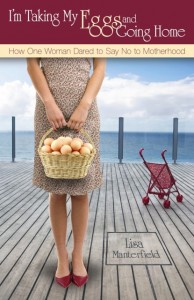
~ "a raw, transparent account of the gut-wrenching journey of infertility."
~ "a welcome sanity check for women left to wonder how society became so fixated on motherhood."