This week’s Whiny Wednesday topic is a tough one.
Baby names you never got to use
As always, you’re free to vent on your own topic, too.
filling the silence in the motherhood discussion
This week’s Whiny Wednesday topic is a tough one.
Baby names you never got to use
As always, you’re free to vent on your own topic, too.
By Kathleen Guthrie Woods
I love my gynecologist. She’s smart, she’s about my age, and like me, she’s childfree. So, yes, I believe she “gets” me.
That’s why it continues to gall me that her office still doesn’t “get” how devastating each of my visits are. I make a point of not making eye contact with anyone else in the waiting room. I don’t want to know—I don’t want the possibility of sensing—that the woman sitting across the room from me is in the full bloom of pregnancy. I also don’t want to know if the woman four seats over is falling apart because she’s about to get confirmation that another round of fertility treatments has failed to produce a longed-for baby. Honestly, I have enough on my plate just keeping my own emotions in check as I telepathically beg the nurse to call my name next.
And I’m pretty successful until I walk past the gatekeeper and enter the hallway where I’m once again faced with The Wall.
Technically, it’s one long wall with three bulletin boards overloaded with healthy baby and family photos. Hello, knife to the heart! There’s no avoiding it. It’s literally IN MY FACE as I make my way to the scale, then to the ladies’ room, then back into the hallway and to the exam room. I get one last look as I head out, and I typically manage to hold myself together as I ride down the elevator (sunglasses on, just in case), exit the building into the glaring sunlight, and all but crawl into my car where I let it all go.
Failure. Loser. Incomplete Woman. Freak of Nature. These are all the labels I give myself as I process my annual confrontation with The Wall.
With this being National Infertility Awareness Week, I wish my doctor and her staff could be more, well, aware. For the sign on their office does not read “Health Care for Mommies Only” or “Doctor of Pregnant and Breastfeeding Women”. It’s supposed to be an office that provides health care for all women. Although my reproductive system may have exceeded its best if used by date, I am still going in for my routine physical checkups, I continue to be a paying customer, and (dangit) I’d like to be represented on The Wall.
So, here are my suggestions:
I hope that I’ll see some changes on The Wall when I go in for my next checkup. But honestly, I don’t know if I’ll have the courage to look.
Kathleen Guthrie Woods is a Northern California–based freelance writer. She is mostly at peace with her childfree status.

By Lisa Manterfield
Do ever feel as if you’re in a constant battle with yourself? So often I make a decision and forge ahead on the path of my choice, only to catch myself looking longingly at another paths and wondering if I ought to have taken them instead. As soon as I make a decision I lose sight of all the things I’ll gain from choosing that path and can only see all that I’ll be losing from walking away from the other paths.
I certainly did that when I chose the “life without children” path. I knew what I would gain by opting to stop treatments and I knew what I would gain by walking away from the adoption route we were on. I knew that my sanity and my marriage would benefit from that decision, and that I’d claim back the life that was passing me by. But I could also see clearly everything I would lose from walking away from the possibility of motherhood.
I know I made the right choice, and I’m glad I kept walking on my chosen path, but it doesn’t stop me looking back once in a while to see where I might have been.
Recently I had a conversation with a friend who was making some difficult life decisions. She talked about the idea of trusting that the path you’re on will take you where you’re supposed to be.
At first glance, this reeks of “everything happens for a reason,” a philosophy that makes me bristle. Personally, I do not believe that I was denied children so that I could take a bigger, more important path instead, or that I wasn’t granted motherhood because it was more than I could handle. I have an untreatable medical condition; I cannot reproduce; end of story; $#it happens.
And yet I’m intrigued by the idea of trusting the path.
There is no doubt that not having children will take me on a very different path than motherhood; it already has. But what if I stopped fighting that? What if I stopped looking over my shoulder at all that I’ve lost and trusted that the path I’m on will take me where I’m supposed to go? Granted, I might not have much to blog about with my new peaceful self, but perhaps I could just enjoy the journey and see where it takes me.
What do you think about the idea of trusting the path?

As told to Kathleen Guthrie Woods
Nora endured devastating abuse from her parents and from a former husband. With such dysfunction in her world, becoming a mother wasn’t something she dreamed about. Then she discovered she was pregnant. “I wanted to keep the baby very much,” she says, “but the situation was too dire.” So she made the heartbreaking decision to end the pregnancy.
With the help of therapy and work in creative fields, she has survived her youth and has healed herself “to the point of being able to live in a loving relationship” with a wonderful fiancé. “I can finally do something productive with my life,” she writes, yet at the same time, feelings of doubt and failure pop up as she wrestles with the results of her choices (oh, how I hate that word).
I hope you’ll offer her words of compassion and encouragement in the Comments, especially if you can relate to her story and have escaped an abusive situation yourself.
LWB: Describe your dream of motherhood.
Nora: I honestly never pictured myself as a mother. The whole idea felt too foreign to me, as I came from a religious family that was profoundly dysfunctional and had no internalized positive image of motherhood. I came to terms with the reality of being an orphan after I disowned my abusive parents and cut contact with my younger siblings who were my only other relatives. I started therapy as early as I could, driven also by the fear that if I didn’t arrive at a point of healing soon enough, I might be too old to create a loving family of my own when that day finally arrived. I have found this to be common among victims of child abuse.
LWB: Are you childfree by choice, chance, or circumstance?
Nora: Circumstance. I believe if I had had a semi-functional family background, I would have made better relationship choices in my 20s and I´d feel encouraged to plan for a family with my fiancé now.
I had an abortion at 27 when I unfortunately became the victim of a serial fraudster, a foreigner who married me and then took all my money. This man took advantage of my profound longing for family and for love. I wanted to keep the baby very much, but the situation was too dire. He was threatening me, and I was in danger of developing serious STDs, which could have affected the child, too. It all happened so fast.
LWB: Where are you on your journey now?
Nora: Sometimes I think about that abortion, that somehow I “could have made it”, living in a shelter house, alone in a foreign country. But then I come back to my senses and realize it was the best decision. I would never want to bring a child into the mess I grew up in. The possibility of having a family is fading in front of my eyes when I realize that nothing is going to happen unless I put substantial effort into creating a suitable environment for a child—and I feel too hollow and tired to pursue it. I never really expected to become a mother, so it doesn’t surprise me. It just feels of empty and out of reach for me.
LWB: What was the turning point for you?
Nora: When I moved in with my fiancé, into his one bedroom apartment, it finally dawned to me that it’s never going to happen. He is a bachelor, 10 years older, and looking forward to his military pension. But I think we both find the fantasy somewhat comforting, that we “still can change our minds.”
LWB: What’s the hardest part for you about not having children?
Nora: Feeling like a failure, like I am not “good enough”, normal, natural, whatever. But I guess it’s cruel to measure oneself against other people’s standards. None of them has walked in my boots.
LWB: What’s the best advice you’ve received?
Nora: Somebody related the question of motherhood to a form of immortality, and said it is viable through creating children or something else of lasting value, like art.
LWB: What’s your Plan B?
Nora: I want to become a writer and documentarist. I find art and writing very fulfilling, but also it asks for your full being to be present. Sometimes I feel I have already given up some of that creativity by entering a close relationship, but I don’t regret that. I love my fiancé, and I can picture living a happy life together.
What is your Plan B? Or are your wounds so raw that you can’t even imagine a happy future? We can all benefit from hearing about your experiences, plus we’d like to support you. Please visit the Our Stories page to get more information and the questionnaire, and consider sharing your story with women who truly understand what you’re going through.
Did you know Kathleen Guthrie Woods is getting ready to tell her own story? The Mother of All Dilemmas follows her journey of pursuing being a single mother then embracing a life without children, and explores the reasons our society still presumes to calculate a woman’s worth based on whether or not she’s a mother. Keep an eye on LifeWithoutBaby.com for announcements about the book’s release.
Some people assume that if you don’t have children you have nothing but time. Nowhere you have to be, no responsibilities, and certainly nothing important to get home for.
Which brings us to this week’s Whiny Wednesday topic:
Being taken advantage of at work because you don’t have kids
And, go…
Have you ever been in a conversation with a group of women, only to watch the talk turn to motherhood and feel yourself fading into the background?
That’s the topic of this week’s Whiny Wednesday:
Being excluded from conversations because you don’t have children
Happy Whining!
As told to Kathleen Guthrie Woods
“I think I have not yet healed as much as I would like,” Janey wrote to me in her cover letter. She first filled out our questionnaire for this column in early 2015, just a year after she ended her 17-year-long IVF journey—one that included six unsuccessful IVF cycles, a miracle natural pregnancy and heartbreaking miscarriage, and an ectopic pregnancy with a donor egg that required emergency surgery. I wept as I read “A lifetime of longing and waiting was literally ripped from us in under an hour.”
This past November she turned 48, the cut-off age for possible treatment with donor eggs and the final “no” to any possible miracles. With her wounds still so very raw, she decided to send in her story. “I would so love not to feel a tightening in my throat when others make announcements or speak of their pregnancy/toddlers,” she wrote. “I hope sharing my story helps others and me in finally letting it all go.”
That’s my hope, as well.
LWB: Describe your dream of motherhood.
Janey: I’ve wanted my own baby as long as I can remember. I recall being envious of my older cousin when she was pregnant with her first; I was about eight. I asked my mum constantly to have a younger brother or sister. I dreamed of watching a child grow, nurturing, going to the park, cooking for him/her, and just wanting them to grow up balanced, loved, and feeling important and happy.
LWB: Where are you on your journey now? (for example: still in denial, angry, hoping for a miracle, depressed, crawling toward acceptance, embracing Plan B)
Janey: Crawling toward acceptance. I still feel all the other emotions on a daily basis and cannot quite believe a lifetime of yearning and waiting has ended this way.
LWB: What was the turning point for you?
Janey: After 17 years, being told I needed an operation to check out my remaining tube. I felt sick at the prospect of more treatment that would still only offer a slim chance of success. I think I lost my faith that day, and I could no longer hide behind “any statistic however low was better than no chance”. That pain was rock bottom for me and my husband, for we cannot knowingly go further into that desperately sad place that we have been so many times before. Then, when I told my husband the clinic had called to offer us another donor, I saw hope dance across his face momentarily, instantly followed by a darkness that drained him of all his colour. I saw a physical shadow cast across his features, one of anger, sadness, and terror. This is what I recall whenever I feel weak.
LWB: What’s the hardest part for you about not having children?
Janey: Not having the day-to-day joy/struggle that is part of everyone’s life. No first words, school days, birthday parties. The pride as they grow in life and leave school, get work, meet partners. I can recall the pride I see in my mum when she talks of me or my brother. I broke down recently when she was at the hospital with her hip replacement and was asked, “Who do we call if you have a problem?” Answer, “My daughter, Jane.” I will never have that, not ever.
LWB: What’s one thing you want other people to know about your being childfree?
Janey: That it was not a choice, I am not free. I deal daily with the disease of infertility and the sadness of not ever being able to hold and nurture my own child. I constantly put my feelings aside and congratulate others, and I would love for the fertile world to acknowledge the devastation of infertility and the lasting impact.
LWB: How do you answer “Do you have kids?”
Janey: “No. Life has not gone to plan on that front, and I’m unbelievably sad about it.” By the time I got to being able to respond this way, I realized I was too old for people to ask; they generally assume I have them and they have left home by now. It feels easier to leave it that way. I think I said it once to someone, and they were momentarily understanding. It felt liberating at the time and a step forward towards acceptance.
LWB: How has LWB helped you on your journey?
Janey: Finally seeing that my feelings over all these years are normal. I have experienced so much jealousy and anger at the world, and it was wonderful to have that validated and not to keep forcing myself to face people or situations that leave me drained. LWB has allowed me to feel quite a lot of pride in myself for getting out of bed and going to work and finding the good in myself. This is not all there is to me. I am whole and I am enough.
Where are you on your journey? Are your wounds raw? Have you made some progress toward accepting a life without children? We can all benefit from hearing about your experiences, plus we’d like to support you. Please visit the Our Stories page to get more information and the questionnaire, and consider sharing your story with women who truly understand what you’re going through.
Did you know Kathleen Guthrie Woods is getting ready to tell her own story? The Mother of All Dilemmas follows her journey of pursuing being a single mother then embracing a life without children, and explores the reasons our society still presumes to calculate a woman’s worth based on whether or not she’s a mother. Keep an eye on LifeWithoutBaby.com for announcements about the book’s release.
A while ago, I asked you to share topic ideas for Whiny Wednesday. Quite a few of you were glad to oblige. Thanks for the great ideas. If you’d like to suggest a topic, please leave it in the comments below. (Add ** so I can easily find it, please.)
This week’s Whiny Wednesday topic is this:
Other People’s Pity
As always, you’re free to vent on your own topic, too.
By Lisa Manterfield
Yesterday was Mother’s Day in the U.K.. I know it will have been a very difficult day for many of you. For me, the small upside to living on the opposite side of the world from my mother is that I can cheerfully celebrate her without needing to protect myself from the celebrations swirling around me. Come May 14, Mother’s Day in the U.S., I can keep a low profile without feeling like I’m neglecting her. I’m grateful for that.
During a visit to the U.K. a couple of years ago, I was my Mum’s date at a senior social night she wanted to attend. Aside from the organizer’s son and grandchildren, I was the only person under 70. It was great.
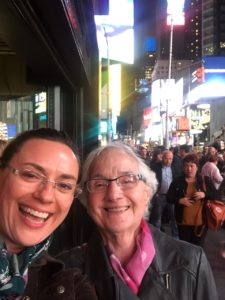 At the event I ran into the mother of an old school friend I haven’t seen or heard from in 20-plus years. When I asked after him, she regaled me with a running inventory of all his successes—his well-paying job, his lovely wife and her lovely job, their lovely house, and, of course, their two amazing children.
“And do you have children?” she asked.
“No,” I told her. “I don’t.”
And I swear to God that was the end of our conversation. No questions about my husband, my work, where I lived, or what I’d done with the last 20 years. Nothing.
I can imagine the conversation she’ll have when she next sees her son.
“I ran into Lisa the other week. She doesn’t have any children. Poor thing.”
My overriding feeling is this: She is a very nice lady, but I’m glad she’s not my mother.
My mother was sad for me that I couldn’t have children, but she’s never made me feel like a failure as a daughter because of it.
I’m honestly not sure what my mother says when people ask her if I have any children. I’m pretty sure she doesn’t drop her eyes from the shame of having to tell people her only daughter is barren. I hope she sees me for all the things I am, including the fact that I’m not too self-important to go with her to a senior social night and sing songs with the old folks.
I hope I give my mother plenty to be proud of, even if I didn’t give her grandchildren.
A while ago Kath sent me this article about Dolly Parton and her views on childlessness and other people’s children. She talks about how she’s made room in her life for her nieces and nephews, how their children came to call her “Aunty Granny”, and how she’s now “Gee-Gee” (for great-granny.)
“I often think, it just wasn’t meant for me to have kids,” she says, “so everybody’s kids can be mine.”
I love her for that attitude.
So, why did this lovely article warrant a Whiny Wednesday spot?
Because in the sidebar of People magazine, in a section titled, “You May Like…” where I’d expect to find articles about other cheroes (heroes who happen to be child-free) like Miss Dolly, instead I’m offered stories about the ever-expanding Duggar clan and even more “things you didn’t know” about celebrities and their offspring.*
Even when we do get to hear about someone without children, there’s no escaping the fact that, ultimately, families rule.
It’s Whiny Wednesday. What’s under your skin this week?
*Note: when I checked this week, there were new non-kid articles, so it may be safe to go and read the Dolly piece.

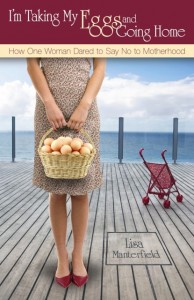
~ "a raw, transparent account of the gut-wrenching journey of infertility."
~ "a welcome sanity check for women left to wonder how society became so fixated on motherhood."