You’ve probably noticed that there are triggers all around—at the mall, in the mail, on TV, in the streets. So this week’s Whiny Wednesday topic is this:
Being caught in public by surprise feelings of loss or grief
Whine away, my friends.
filling the silence in the motherhood discussion
You’ve probably noticed that there are triggers all around—at the mall, in the mail, on TV, in the streets. So this week’s Whiny Wednesday topic is this:
Being caught in public by surprise feelings of loss or grief
Whine away, my friends.
We could easily compile an entire encyclopedia of unhelpful, and even hurtful, things people have said to us. I think this one stings as much as any:
“Everything Happens for a Reason”
Do you agree? Or do you have your own favorite “helpful” slight?
I have a large scar on my left knee. It has black lines of grit in it, and smooth patches of scar tissue that catch the light on an otherwise rough patch of skin.
My scar is 30 years old and I don’t think about it very often anymore. It doesn’t hurt, even when I poke it, and the wound that caused it healed long ago.
But if I think back to the day I got my scar, all the memories and the pain come flooding back. I remember the bike accident. I remember riding through the trees on a gorgeous sunny day, laughing with my friends and flirting with a boy I liked. I remember trying to get his attention and catching my front wheel on his back tire. I don’t recall sailing through the air, but I must have done, because I do remember skidding along the trail, trading bits of knee for bits of trail.
I remember sitting in the bath at home and crying as my mum tried to clean the wound. And I remember my older brother—a bit of an expert on injuries and scars—gently coaxing me to scrub out the grit or be left with a terrible scar.
I also have a vague recollection of a discussion among adults (not my parents) about plastic surgery and what a shame it would be if a “pretty girl” was disfigured by an ugly scar.
It all happened so long ago, but dredging up these memories can bring back all that pain, my embarrassment, the tenderness of my brother, the feeling that my scar would make me “less than” I could have been. I can feel all of it again as if it had happened in more recent memory.
I feel this way about my infertility and childlessness, too. Most days, I don’t think about it anymore. But lately I’ve been writing about grief and loss, and some of those awful feelings of sadness, anger, and deep, deep loss have been coming back to me.
It’s taught me that the healing process for emotional scars is much the same as for physical scars.
You have to suffer some terrible pain to clean the wound. You have to struggle through the initial all-consuming grief. You have to ask for support from people who might not know how to give it. You have to walk again, even if every step is agony. You’ll meet people who will see you as damaged and less than you could have been, because you no longer fit into their ideal of perfect.
But over time the healing begins. You’ll knock your healing wound a few times and break it open again. In one particularly unfortunate incident, you’ll fall on the same wound and end up with a double scar. But you’ll remember how much you loved riding a bike and you’ll take it up again. And you’ll meet new people, who don’t care whether you have one ugly knee, because they’re more interested in some other facet of who you are. And you’ll realize that being a “pretty girl” wasn’t what you were destined to be anyway, and you’re happy being an outdoorsy girl who’s accumulated a multitude of scars since then.
And when you’re shaving your legs (which is trickier because of the scar) you might sometimes recall how you got the scar and the pain you went through. But most days, you won’t even think about.
Having a big scar on my knee means I never got the opportunity to be a leg model, but I got to be so many other things instead, things that have made my life journey quite interesting. My infertility scar is much newer than my knee scar, but it is healing in ways I couldn’t have imagined when it was new and raw. And the things I never got to do or be have left room for so many other opportunities.
By Lisa Manterfield
How do you know when it’s time to stop pursuing your dreams of motherhood? How do you know when enough is enough, when you have to reclaim your life and make new plans? It’s not a simple question to answer.
There were several moments that I wrote about in detail in I’m Taking My Eggs and Going Home. These were moments when I knew, deep down, that I had to stop treatment and had to find a way to move on without children.
The first was when I was sitting at a bus stop on my way home from my third doctor appointment of the week. I realized that getting pregnant had become a full-time job and that it was consuming every aspect of my life. Case in point, I don’t even remember why I was taking the bus (two buses, actually) to my appointments, but I do remember that this had become my habit. I can picture myself now, staring out the bus window, almost in a trance, so wrapped up my world of infertility, I was barely aware of my actions. I knew then I had lost touch with reality and myself.
Another point came not long after Mr. Fab realized that adoption wasn’t going to be a viable option for us. This really should have been the stopping point, but before long I found myself in the infertility section of the bookstore, browsing a book by a doctor who had performed fertility miracles through Chinese Medicine. I bought the book, even though we’d already traveled far down that road. When I mentioned it to Mr. Fab, he said all the right, supportive things, but I saw his face drop for a moment. I knew that he was wrung out, that he had reached the end of his journey, and that I should have been at the end of mine, too. But by the end of that week, I had an appointment with the miracle doctor and I was back on the bus, both literally and figuratively.
One of my last lightbulb moments came when Mr. Fab’s first grandchild was born. That passing of the motherhood torch to the next generation served to tell me that it was time for my journey to end. I had done all I could, motherhood wasn’t going to happen for me, and I had to let it go.
In between these events, and even after I was sure I would not be a mother, there were many moments of doubt, of second-guessing, of what-ifs. But for every step backwards, I took two steps forward toward recovery, and then three, and then four, until the backward slips became fewer and eventually stopped.
I imagine each of you has a similar story of realization and doubts. What were your “lightbulb” moments and how did you finally know it was time to stop?

As told to Kathleen Guthrie Woods
When I first read Karina’s story, I was struck by how much of it I could relate to. Then her answer to “What’s the best advice you’ve received?” gave me chills (in a good way). “YES!” I all but yelled at my laptop.
I hope you find some encouragement here. xoxoKathleen
LWB: Briefly describe your dream of motherhood.
Karina: Motherhood wasn’t something I really dreamed about. Because I experienced significant trauma as a young child, it made the idea of motherhood actually a little scary for me. I thought about it, yes, many times, especially as my 35th birthday approached. But my thoughts on motherhood were always a bit ambivalent; there was always the fear somewhere in the back of my head. But one day my desire to experience motherhood became stronger than my fear and I just knew I wanted to be one.
LWB: Are you childfree by choice, chance, or circumstance?
Karina: I am childfree by circumstance. I was almost 40 by the time my husband and I married, so we began trying right away. We spent three heart-breaking years trying to make our baby dreams a reality.
LWB: Where are you on your journey now?
Karina: I’m crawling toward acceptance. I still can’t go to baby showers. It’s still difficult to see pregnant women. I still have seconds-long fantasies that a miracle happens. I still have bad days. But I started therapy about a year ago and I have more good days than bad days now. Sometimes I can even talk about my experience and not get teary-eyed. I know it’ll continue getting easier each day, but I don’t think the pain ever goes away completely. It just becomes a smaller part of who you are.
LWB: What was the turning point for you?
Karina: My turning point started when we lost our three little embryos in our one and only IVF cycle. We were absolutely devasted. After years of trying, countless treatments, an early miscarriage, and a surgery to remove some uterine fibroids, we prayed that IVF would finally be the answer. But it was not to be. I had never in my life felt so hopeless and so completely broken physically, mentally, emotionally, and spiritually. I didn’t leave our house for two weeks. Somewhere in all that darkness, though, I found the strength to finally get help and began seeing a therapist. I’ve been in therapy for a year now and having recently celebrated my 43rd birthday, I can say that I’m ready to turn the page and begin this next chapter of my life. I’m ready to discover this new version of myself.
LWB: What’s the hardest part for you about not having children?
Karina: Not experiencing pregnancy and the miracle of giving birth. Not knowing what our children would have looked like and which traits they would’ve inherited from each of our families. Knowing our family tree ends with us. Those are the things that I struggle with the most.
LWB: What’s the best part about not having children?
Karina: My nieces and nephew. I spoil them rotten and I enjoy every moment!
LWB: What’s the best advice you’ve received?
Karina: Sometimes you have to let go of the life you that hoped for and trust in the life that is.
LWB: What is the best advice you’d offer someone else like you?
Karina: I know it hurts so much right now. I know it hurts so much that sometimes you think you won’t ever feel whole again. But you will; you are stronger than you know. It’s going to be very hard, but you will make it through. Because this is not the end for you. It’s only the beginning.
LWB: What is your hope for yourself this coming year?
Karina: To live our best life one day at a time.

A reader sent me a wonderful blog post that I wanted to share with you as we go into the New Year. It begins with this quote:
“We spend January 1 walking through our lives, room by room, drawing up a list of work to be done, cracks to be patched. Maybe this year, to balance the list, we ought to walk through the rooms of our lives… not looking for flaws, but for potential.”
I really relate to this quote because, in the past, this is exactly how I’ve approached the New Year. I’ve gone room-to-room looking for all the things wrong with me and resolving to fix them in the New Year. Come year-end, I’d look at my goals for the previous January and inevitably find that I’d fallen short, let myself down yet again. So, I’d resolve to do better the next year, to make it the year I improved myself.
I’m not sure whether it’s facing the reality of infertility that’s made me realize there are things about me that just cannot be fixed, or if I’ve just reached an age where I’ve decided to be kinder to myself. Whichever it is, I’ve adopted a new philosophy about New Year’s resolutions.
I no longer resolve to fix my flaws. I’m not going to aim to lose weight or organize my house or try to be more stylish. Nor am I going to compare myself to others—especially women with children—and find myself falling short. I am who I am and, even though I’m far from perfect, I don’t need to be fixed.
Instead I’m looking for ways to tap my potential and be the best version of me I can be. Instead of resolving to be who I’m not, I will try to nurture the best of who I am. I will set goals that point me in the direction I’d like my life to go and not worry about whether the “me” that arrives there is perfect.
As you head into the New Year, will you be making resolutions or setting goals? If so, are you being kind to yourself or are you treating yourself like something that’s broken and needs to be fixed?

My overarching message around the holidays has always been this:
Do what you need to do to protect yourself when your emotions are still raw. Back out of the holidays all together, if that’s what feels right. Create new traditions that suit who you are now. And most of all, hang in there, because it does get easier, and eventually you’ll find a way to make the holidays joyful again.
But, this year, I want to make an amendment. Because, the truth is, for some of you, the holidays might keep sucking for a long, long time, and my being all Pollyanna about it, isn’t going to change that.
For years, I have followed my own guidelines for holiday survival. After a couple of years of trying to force the Christmas spirit, we chose to opt out of Christmas because it was too sad. Then, for a number of years, we made a point of going away and doing something totally non-traditional. It wasn’t “Christmas” as I’d envisioned it, but it felt right for us, and we enjoyed the season again.
I thought I had a different attitude about Christmas. Mr. Fab and I like staying at home, just the two of us, and keeping it low key. We put up a tree and decorated the house. We’ll keep up our new tradition of celebrating on Christmas Eve and it will be a “nice” Christmas, not perfect, but good enough.
I’ve talked to several friends, fellow bloggers who, like me, are several years into being at peace with not having children. They each talked about plans for a quiet celebration, of an adapted holiday experience. And each of them also added that some part of their plans had triggered the old sadness or poked at a tender spot. Not one of us gushed about the jingly joyful celebration we were planning. Instead, we talk of an “almost-but-not-quite” Christmas.
As I was rooting around in my mind, trying to find a point to this post, I suddenly thought about my dad. My dad hated Valentine’s Day, not because of the commercial tackiness, but because his own father had died on February 14th. Even two decades later, he couldn’t find joy in the day, and none of us expected him to. I tiptoed around him and, by February 15th, he was his old self again. As a young girl, hoping to get Valentines in the mail, I couldn’t understand why my dad felt this way. But, of course, I understand it fully now.
I stand by all my guidelines about the holidays: It does get easier. You will find a way to get through the holidays and even enjoy them again. But, odds are, they will always tap a sore spot and serve as a reminder of what’s missing. It might always be “almost-but-not-quite” Christmas.
But, before you know it, it will be January again, a new year and a fresh chance to live the life you do have to its fullest. I don’t know about you, but the New Year is fast becoming my favorite holiday of all.

By Lisa Manterfield
Every year it seems I get caught out with a bout of the Holiday Blues.
After a really fun and non-traditional Thanksgiving with wonderful friends, I headed into December ready to celebrate the holidays my way. Then Bam! I came down with the Holiday Blues.
There will always be things I wish were part of my festive season, like hand-delivering gifts to my family, shopping for small children, and creating the kind of Christmas I had as a child. But it wasn’t theses losses and what-ifs that gave me the blues this year.
Maybe it was the rainy weather that kept me indoors for much of the week. Maybe it was the end of year racing towards me highlighting the things that didn’t get accomplished this year. Or maybe it’s that Christmas doesn’t really feel like something to celebrate anymore.
Finally, I took my own advice, and that of a couple of friends, and dusted myself off. I bought a tree, made plans for Christmas Eve dinner at a favorite restaurant, and wrote and sent my cards. And then I made myself a cup of tea and sliced off a chunk of proper English fruitcake, and I curled up in a chair and wrote in my journal.
I made a list of everything good that happened this year—all the fun things I did (see photo below, for one), the challenges I overcame, the goals I reached this year, the friends I spent time with, the family I visited.

And guess what I discovered? It’s been another great year this year. I have lived my life, perhaps not always to the fullest, but to the best that I was able. And I had a good time doing it.
That, I think, is plenty of reason to celebrate.

By Lisa Manterfield
“Are you the adult you dreamed of becoming?”
I laughed when I read this question on Facebook. No! Of course I’m not. The adult I dreamed of was an international engineering consultant, living in a large house with a circular driveway, with a fabulous husband and four beautiful children, including one set of twins.
Aside from the fabulous husband, that adult is almost the polar opposite of the adult I am now. I’m a writer, who works from my very small rented beach cottage, and of course, there are no children in my picture. And yet, once I stop to consider my friend’s question, I realize that I’m a lot happier as this adult than I would have been had my expectations been met. I’ve met the person I’d once dreamed of becoming; she wasn’t a very happy person and she definitely had more grey hairs than me.
Half the battle of coming-to-terms with a life without children is letting go of our expectations—and creating new ones. This is never more true than during the holiday season, one of the most difficult times of the year to be childless.
When I think of my expectations of what Christmas should be like as an adult, those four children are always there, gathered around the tree, gathered around the dinner table, and then gathered around me as the day comes to a close. Even when I realized that children wouldn’t be part of my life, I still strived to make Christmas live up to my expectations. Consequently, Christmastime was very sad time for a number of years. I knew there was no way my expectations could be met, and eventually I stopped making an effort to celebrate.
The worst year was when my husband and I found ourselves sitting at home, with no Christmas tree, no plans, no celebration, and we knew we’d allowed our lack of children to take over our lives. We also realized it was time to set new, more realistic expectations.
When I took a step back and looked at what I really wanted for Christmas, not on the surface of gifts, family, and decorations, but on a deeper emotional level, I discovered that my spiritual wish list included love, peacefulness, companionship, and a good dose of silly fun. I needed to explore new ways to get what I really wanted.
It took a couple of false starts to find a new way to celebrate Christmas, but a couple of years ago we nailed it. Mr. Fab and I rented an apartment for three days in a nearby beach town. We celebrated on Christmas Eve with a lovely dinner at an historic hotel with an enormous Christmas tree, roving carolers, and even an outdoor ice rink (in Southern California!). On Christmas Day, instead of sitting at home feeling sad about a pathetic Christmas for two, we went to the zoo, like a couple of big kids, and had a whale of a time. I even got to feed a rhino and have an ice cream. We both agreed it was the best Christmas we’ve had for a long time, plus there were no tantrums or mountains of dirty dishes to deal with.
It’s hard to let go of our expectations, especially when they’re often so deeply engrained, but if you’re struggling to find your holiday cheer this year, I encourage you to look beneath the obvious losses and examine what’s really missing for you. Even if you can’t meet your tangible expectations of what the holidays should be, you might be surprised to find you can satisfy your true needs in unconventional—and unexpected—ways.

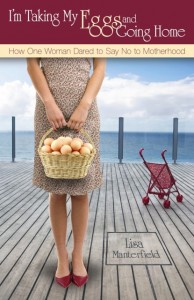
~ "a raw, transparent account of the gut-wrenching journey of infertility."
~ "a welcome sanity check for women left to wonder how society became so fixated on motherhood."