Thanks to Kath for this week’s Whiny Wednesday topic. It’s a good one.
Parenting is the hardest job in the world!
And, go!
filling the silence in the motherhood discussion
Thanks to Kath for this week’s Whiny Wednesday topic. It’s a good one.
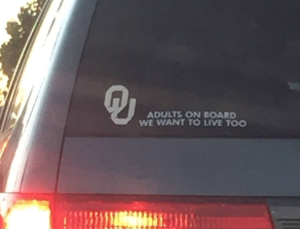
Parenting is the hardest job in the world!
And, go!
Kathleen sent me this photo forwarded from a friend, and I thought it would make a great Whiny Wednesday topic. So, here you go:
Can you believe this is the last Wednesday of 2015? This year has just flown by. This means it’s also the last Whiny Wednesday of the year.
I’m going to open the floor for all whines today, but wanted to add one extra consideration. If you were visiting this site at this time last year, what’s changed for you? Are there things you would have whined about then that don’t affect you in the same way now? Can you see improvements in your outlook on life? Are there things you’re less tolerant of now than you were last year?
Enjoy your whining and I’ll look forward to seeing you here next year.
Happy New Year!
By Kathleen Guthrie Woods
 “Come One, Come All!” trumpets the headline.
I’m skimming the special calendar section of our local paper and find myself drawn into a description of a holiday spectacular and crafts fair, featuring actors as classic Dickens characters and carolers strolling in Victorian dress as they sing in the season. I am so there!
But then I read the small print: “Revelers (that’s me!), particularly families (uh, wait), are invited to enjoy the festivities.” It’s possible I’m being over-sensitive, but I am so sick and tired of slights like this, and it seems to strike an especially painful chord with me as we approach the holiday season. The “Family Sing-Along” at church. The “Family Pot-Luck” intended to bring coworkers closer together. The “Family Movie Night,” where multiple generations come together to enjoy a touching holiday-themed film. I love love love all of these fun activities, and will participate even though I’m not a 5-year-old, even though I am not part of a “family.” It’s sad to me, though, that my revelry is diminished by the sting of not feeling legitimately part of the event, all because of a marketing choice.
While I don’t want to get PC (politically correct) to the point of ridiculousness, I’d like to suggest to the world that there are other ways to welcome everyone without making single and/or childfree people feel…well…unwelcome. “Fun for all ages!” “Something for everyone!” The marketers for the fair had me at “Come One, Come All!” I wish they’d left it at that.
Kathleen Guthrie Woods is a Northern California–based freelance writer. “Mele Kalikimaka” might be her favorite Christmas carol.
By Lorraine Ash, M.A.

©Dave Bredeson | Dreamstime.com
After my daughter, Victoria Helen, was stillborn at full term, I received a strange message from many people, all carrying a theme: I was incomplete.
I wrote a memoir about surviving the stillbirth. I never thought I’d write a memoir, but, of all the genres, it was the most perfect and necessary for me to process the violence that had rocked my life.
The book, Life Touches Life: A Mother’s Story of Stillbirth and Healing, gained readers and touched hearts throughout the United States and in the Middle East, Australia, Europe, China, Canada, and Mexico. Later, I wrote a sequel, Self and Soul: On Creating a Meaningful Life, about how my life, years after the loss, blossomed. What wonderful communions I enjoyed with my readers.
 But none of that stopped the insistent message that my life was fundamentally flawed.
One book reviewer told me my story was not one of courage, but of cowardice, because I didn’t get pregnant again.
“You stopped after failing,” she said.
“I couldn’t get pregnant after that,” I’d replied. “We tried, but it didn’t happen.” She remained immovable in her opinion.
Indeed my husband and I had made a decision that was right for us: we opted against fertility treatments. We’d just gone through hell and barely come back—literally, in my case. The Group B Strep that took my daughter’s life almost claimed mine. For a couple of weeks, I was touch and go. When I was suspended in the uncertain hell between life and death, we became very respectful of the powers of Mother Nature. We decided not to try forcing her to do our bidding.
Once, a well-meaning friend offered this thought: “You had half an experience—a pregnancy up to giving birth. Go and complete it. Adopt somebody else’s newborn baby.”
The piece de resistance, though, was the advice of a famed author who saw the Life Touches Life manuscript in its early stages.
“Stop writing this,” she said. “It’s not an appropriate topic.”
“Why ever not?” I asked, genuinely perplexed.
“Because stillbirth is something that didn’t happen,” she said. “Write about something that did.”
She’s the narrative expert, I thought, but apparently there are stories she doesn’t understand. Something happened, all right. Trust me.
So now two things are true of me: I do not have progeny, and I do not live out my days insisting upon, or lamenting, a destiny that did not, for whatever reason, materialize. I know my genes will not live on. Instead, I embrace a different kind of legacy. I approach eternity not by looking to some faraway future, beyond the imagination, but by embracing the moment called Now as it resonates through my whole being—body, mind, and spirit.
My life is about helping others reach those places inside themselves, too, and encouraging them to tell the full truth of their stories as they are—not as they could have been. My message is that today is the only day any of us can affect and that today, no matter the circumstances, is full and complete.
As the great Buddhist teacher Thich Nhat Hanh has said, “Life is available only in the present moment. If you abandon the present moment, you cannot live the moments of your daily life deeply.”
Tomorrow will be full and complete, too—but different. I can trace the change while still acknowledging the completeness. Becoming whole is a spiritual process. No matter what happens on the outside, it’s an inside job.
Do you live fully in the story of your life, as it has unfolded? Or are there still gifts in your experiences, however painful, that you have not yet opened?
 Lorraine Ash, M.A., is a New Jersey author, award-winning journalist, essayist, book editor, and writing teacher. Self and Soul: On Creating a Meaningful Life, her second book, is available in a variety of formats and online stores, all presented here. Reach Lorraine at www.LorraineAsh.com, www.facebook.com/LorraineAshAuthor , or @LorraineVAsh.
By Kathleen Guthrie Woods
I grew up in a Norman Rockwell painting. White, upper-middle-class, staunchly Republican. Parents still married to each other (for more than 50 years). Dad worked for the same company for 47 years; Mom stayed home to raise three all-American kids. Look at a snapshot of any holiday celebration, and you’ll see us gathered around the dining room table, with flowers from Mom’s garden in the centerpiece, a golden turkey nesting in a great-grandmother’s platter, and everyone dressed with a smile. Picture-perfect.
The flowers, turkey, and smiles are the same in contemporary photos, but we’ve added a few new players. My brother married his college sweetheart and they introduced four beautiful daughters. My sister went off to college and came home a Democrat. Then she went off to graduate school and finally figured out she was a lesbian. A few years later, she joined her partner in a commitment ceremony, and they welcomed two boys with contributions from a sperm donor, a “donor daddy.” I was the lone ranger for many years, the only single person at the table, till I met and married my husband in my mid-40s. He is African-American, and we are childfree.
While growing up and well into adulthood, I never imagined there was any other kind of family for me outside of the traditional model that raised me. I had every expectation that I would follow in my mother’s footsteps and create a home and family in her image. I held tightly to that illusion, through many unfulfilling relationships and socially awkward encounters (“Why aren’t you married?” “Don’t you like children?”). I think it’s a miracle that my “right” family was revealed to me and that I am able to embrace it.
I would argue that our society’s definition of a “traditional” family is flawed. Certainly census statistics show that single-parent homes, adults living alone, and mixed-race families are more the norm than marketing directors would have us believe. I look down our street here in San Francisco (and, admittedly, we are a liberal and open community), and I see this reflected back to me through our neighbors’ homes where multiple generations, languages, races, and genders commingle without special notice.
Here in the childfree community, we’re often made to feel that our families are “nontraditional,” which translates to “less than” or “incomplete.” This way of thinking is so judgmental, so hurtful, and so unnecessary. If you’re single, you can create your own family among close and supportive friends. If you’re married or in a committed relationship, you know that it takes only two to make your family. Other people expand their families to include caretaking of nieces and nephews, elderly relatives and friends, or beloved pets.
The “nontraditional” extended family I am part of today is a beautiful thing, defined by love, acceptance, and respect. In my own home, I feel blessed to be one of a family of two, which we augment by sharing our table with friends who have become family. This is my family, this is my new traditional, and I think it’s perfect.
Kathleen Guthrie Woods is a Northern California–based freelance writer. She is mostly at peace with her childfree status.
By Lisa Manterfield
 I’ve been writing and talking a lot about grief lately—here on the blog, in my fiction, in my personal life, in the novels I’m reading, and for the Life Without Baby book I’m working on. Even when I got chatting to a stranger on a train, the conversation turned to the topic of grief.
Over paper cups of tea, this woman—who had lost her brother to suicide—and I talked about how grief stays with us long after we’re “over it”, how the shape of grief changes with time, how it can change us, and how everyone carries around their own personal grief.
My only regret in the discussion is that it didn’t begin sooner on our journey, because I would have liked to hear more about what she had to say on the subject. But eventually we parted ways, she to her office and I to airport, and I didn’t have the opportunity to ask her more about her grief.
So, I’d like to ask you instead.
As a society, I don’t believe the topic of grief gets enough attention. We’re uncomfortable with grieving people, no matter what type of loss they’ve suffered, but it’s especially true when the loss isn’t understood.
So let’s start the conversation now. Let’s talk about this grief. I’d love to hear what you have to say.
By Lisa Manterfield
 When you realized you were never going to have kids, did you reassess your lives and make any big changes that you never would have made had you had kids?
I was asked this question recently and it caused me to stop and think. Much of the past five years has been spent healing, coming to terms with a life without children, and learning about myself again. And while I’ve done a lot of reassessing about the kind of life I want to live, I’m not sure much has changed.
When we thought we were going to have a young family, Mr. Fab and I had planned to buy a house in the neighborhood where we rent. The schools are good, and the city is family-friendly. But now we won’t be having children, that’s no longer a priority and we’ve talked a lot about where we’d like to live now that we’re free to live almost anywhere. Buying a house is no longer a priority. In fact we have our eyes on a sailboat instead.
But aside from that, not much has changed in the way we live. Much has changed in the way we thought we were going to live, but when I step back and reassess, life really has just gone as before.
Sometimes I think we feel pressure to do a major life overhaul when we realize we won’t have children, but is that true? Yes, I have more freedom to take opportunities and make changes, but after all is said I’m done, I’m still the same old Lisa and the things that were important to me before are largely still important to me now.
How about you? Have you made big changes now that your life won’t include children?
The final book in the Life Without Baby ebook series comes out tomorrow! In Thriving in a New Happily Ever After, we look at how to find joy in your life again, how to decide what, if anything, needs to change, and how to take the first steps to move in a new direction.
By Kathleen Guthrie
 Shortly after I sent out save the date cards for our wedding, I received several variations of “Didn’t know you were pregnant – har har!”
I didn’t finding this the least bit humorous, although I’m sure that is what those Jim Carrey–¬wannabes had intended. My fiancé and I had been together for four years, living together for two. We were getting married because we wanted to, not because we had to. And so what if I was pregnant? Would it make this occasion, our commitment to each other, any less solemn?
Of course, because I had finally (mostly) made peace with our decision to be childfree, our friends’ insensitive responses struck a deeper, more painful chord. What I really wanted to do was reply back by saying, “No. Sadly, pregnancy is no longer an option for me.”
But that would have been rude.
Kathleen Guthrie is a Northern California–based freelance writer. She met and married her Mr. Right in her 40s.
As told to Kathleen Guthrie Woods
 “For as long as I can remember, I wanted to be a mother,” Ann writes. “I could picture the children more clearly than I could picture any partner.” Now 49 and divorced, Ann still wonders if there is a way for her to become a mother. Here’s what she has to say.
LWB: Are you childfree by choice, chance, or circumstance?
Ann: I am childfree because my ex-husband and I had three traumatic pregnancy losses—a full-term stillbirth, a termination due to chromosomal abnormalities, and a miscarriage. We were diagnosed with infertility and found ourselves in a vulnerable enough state in our marriage that it didn’t seem right to adopt.
LWB: Where are you on your journey now?
Ann: I am amicably divorced. I am mostly at peace with my childless state, though I still have times when I think of adopting.
LWB: What was the turning point for you?
Ann: The turning point for me—and it took a long, tangled while—was realizing that my marriage and my desire to be a parent were separate. I needed to address the state of my (unhappy) marriage before I could address the idea of becoming a parent. I have never wanted to go into parenthood as a single parent, and this still mostly holds true now that I’m divorced.
LWB: What’s the hardest part for you about not having children?
Ann: The hardest part about not having children is that I feel as if my natural state is to be a mother, and I’m not (except to my dog and very occasionally to my nieces, nephews, and friends’ kids). This is confusing and makes me feel as if I’m denying who I really am. Then I get all worked up about why I don’t have children. My decision to not be a parent has more logical reasoning behind it than maybe it should.
LWB: What’s one thing you want other people (moms, younger women, men, grandmothers, teachers, strangers) to know about your being childfree?
Ann: I used to view people who were childless as kind of limited and selfish. I want the world to understand that being childfree for many of us is not by choice. Even though we live in a world where we have a lot of choices, there are many very legitimate reasons why we remain childless. This does not mean we do not care about children as much as the next person. This does not mean we don’t or can’t understand love. I hate it when people say they didn’t understand what love was until they had children, as if those of us who don’t have children don’t know what love is. I hate hearing about groups such as Moms For or Against…whatever the cause is. Why can’t they be People For or Against…. I hate it when parenting queries are addressed only to parents, as if all the time I have spent around kids doesn’t count. I also hate the doubting part of me that worries that I am limited and selfish by not doing all I can to have kids.
LWB: How do you answer “Do you have kids?”
Ann: Mostly I answer “No.” Sometimes, depending on the context and the company, I answer “None living.”
LWB: What is the best advice you’d offer someone else like you? (or What advice would you like to give to your younger self?)
Ann: The best advice I’d offer someone like me now is not to be too hard on yourself and to find ways to make yourself happy. It is hard to live a different life than you envisioned yourself living. Give yourself time to sort it out. There are many ways to positively influence kids without being their parent. The world needs us all—parents and non-parents.
The advice I would give my younger self is different. I would encourage my younger self to get started on the parenthood quest sooner. My older sister had a life plan: She wanted her first child by 30. I had no such plan. Perhaps if I had, my life would be different now.
Won’t you share your story with us? Go to the Our Stories page to get more information and the questionnaire.

~ "a raw, transparent account of the gut-wrenching journey of infertility."
~ "a welcome sanity check for women left to wonder how society became so fixated on motherhood."