It’s Whiny Wednesday. Hurray!
This week’s topic needs no introduction, so I’m just going to post it:
Whine awaY!
filling the silence in the motherhood discussion
It’s Whiny Wednesday. Hurray!
This week’s topic needs no introduction, so I’m just going to post it:
Whine awaY!
Graduation season is upon us and social media has been abuzz with snapshots of proud parents and their offspring. So it seems like a good time for this week’s Whiny Wednesday topic:
Feelings of jealousy when friends and relatives celebrate the milestones of being parents and grandparents.
As always, your other whines are always welcome.
They’re everywhere. You’ve heard them spouting about pre-schools. You’ve seen them take over restaurants. Maybe you’re even related to one!
They’re the topic for this week’s whine:
Uber-Parents
Here’s your chance to blow off steam.
By Solo Girl
 I have a large extended family; we have to rent a hall for big family holidays so we can all get together. And now all those sisters and female cousins are newly married and reproducing. Every time a baby shower comes up I’m invited, and I wrestle with myself over whether or not I should be able to go yet.
I’ve always been supportive and encouraging with my family, happy to celebrate in another’s happiness. It’s been four many years since my dream died, and I get the sense that I’m expected to be “over it” by now.
Unsure and not wanting family to think I’m selfish or emotionally immature, I went to a cousin’s baby shower about a year ago. I mentally prepared myself ahead of time. For example, I’m terrified of flying, but I know that there is lift-off, food, a movie and a landing, and then it’s done. I thought about how there would be food, presents and games at this shower, and then it would be done. I thought to myself “I should be able do this, even my own Mom is expecting me to go.”
I thought the worst part would be the games, but I was wrong. It was the chitchat. I actually got stuck between my mother and a cousin having a conversation on the couch about how all the women in our family have long labors. Seriously. When I got home I wrote myself a note in black marker and stuck it on my kitchen pin board where it still remains today: “You never have to go to another baby shower ever again. No one will notice; no one will care. It’s torturous. Don’t Go. Don’t feel guilty”.
But a year later I still get shower invites and I continue to question whether I am – or should be – ready to attend now. And I want to know, is it ever going to be something I can attend? And what can I tell my family that will help them understand how painful it is to attend without sounding like I’m feeling sorry for myself after all this time? They have high expectations of me, and I really do think they mean well. I was in a deep depression four years ago, and I think they are trying to make me normal again. I think.
I’m glad Irina Vodar is producing a documentary on the subject of infertility that some helpful social norms will come of it.
How do you handle these situations?
Solo Girl lives on her own with her 2+ dogs in Ontario, Canada. She focuses her time on volunteer work and fostering rescue dogs.
Some time ago, Maybe Lady Liz wrote a brilliant guest post about friends posting pregnancy announcements on Facebook, only to add that they were “accidents.” I thought it would be a great topic for this week:
“Accidental” pregnancies
You can read Liz’s original post here. Just be advised if you decide to click through to her blog that it is no longer about not having children, as Liz is now a mom.
By Lisa Manterfield
 Have you ever been around people who behave as if you can’t possibly know anything about life because you don’t have children?
I’m sure that all of us have heard the old chestnuts, “You wouldn’t understand; you don’t have kids” or “I didn’t understand until I became a mother” (which implies the same thing) or even “Only a parent could know how this feels,” as if being childless strips away all capability of empathy.
And then there are those situations where you just feel invisible, when the conversation about children and parenting is swirling around you and no one even bothers to make eye contact with you because what could you possibly contribute?
These instances make me think of the wonderful “Mr. Cellophane” number from the musical “Chicago.”
And even without clucking like a hen,
Everyone gets noticed now and then,
Unless, of course, that person it should be,
Invisible, inconsequential me.
Personally, I’m done with feeling insignificant because I don’t have kids. It took me a long time to get to this point, but now I hold my ground in conversation. I contribute when I can and simply listen and nod when I can’t, just as I would if I found myself in a conversation on any other topic on which I’m not an expert.
I also keep a list of amazing childless women in case I ever need to remind myself that we don’t need to be parents to make a difference. On my personal list is Amelia Earhart, Dian Fossey, Julia Child, and Juliet Gordon Low, who started the Girl Scout movement. If you need your own role models, Jody Day has put together an outstanding collection on Pinterest.
You’d be hard-pressed to call any of these women insignificant. I remind myself of this when I find myself allowing others to make me feel like less than who I am.
So what do you do when you start to feel like a Ms. Cellophane? Do you feign boredom, try to hop in with an intelligent anecdote, change the subject, or do you slip away and hope no one notices you’ve left?
By Kathleen Guthrie Woods
 I am going to be a “mystery reader”! This is nothing like a mystery shopper, someone who goes into a store, shops a bit, then rates the service. Instead, I am the mystery. On a given day, after tantalizing clues about my identity have been revealed, I will surprise my 6-year-old nephew when I show up to read a story to him and his fellow first-graders.
I about leapt out of my chair when I read the invitation my sister forwarded from the teacher to aunts and uncles, grandparents, and special friends. “I AM SO IN!!!!” I replied. I love reading to my nieces and nephews. Bedtime stories with friendly monsters, fairytales with happy endings, wild yarns that tickle the imagination; hand me any book and we’ll read it together. Before I moved closer to them, I even checked out books from the children’s section of the library, made up silly voices for each of the characters, and read to them over the phone.
My date isn’t until after the new year, but I immediately started thinking about my selection. Make Way for Ducklings is a personal favorite from my childhood. I regularly give Mo Willems’ Knuffle Bunny and Knuffle Bunny Too as shower and first birthday gifts. Dr. Seuss, wild rumpusses, Shel Silverstein, the many adventures of Winnie the Pooh…and then it hit me. I’ve been giving these beloved books as gifts for years, but I don’t have any of them on my own shelves.
Dangitall! I always assumed I’d have a shelf full of children’s storybooks, and I imagined how I would teach little ones how to read then sit in awe as they discovered the joys of reading for themselves. I looked forward to becoming reacquainted with my favorite characters, experiencing precious stories through a grown-up perspective, and appreciating anew the artistry that goes into creating them. I’ve been making such good progress in coming-to-terms with my childfree status that I didn’t see this left hook coming. Like with so many of our experiences as childfree women, something that made me so happy also makes me so very sad.
I will pick myself up, dust myself off, and pick a story that I think will be fun for everyone. It’s no mystery that I’m going to savor every moment I have with my wee audience. Meanwhile, I tip my hat to the thoughtful teacher who came up with the mystery reader program and is giving me the opportunity, just for one morning, to live in my fantasy world.
A college friend just posted a photo of her son at his high school graduation.
It got my attention because the “kids” weren’t much younger than my friend and her now-husband were when I first met them, and, as the boy looks like his father, the photo reminded me of them and how flipping long it’s been since I was in school.
It also caused a pang of sadness for another experience I won’t get to have. I won’t get to send my teen off to college or take a photo of him and realize he’s a carbon copy of his dad.
It’s Whiny Wednesday, and today I’m feeling whiny about how unfair life can be.
By Lisa Manterfield
 Here’s how I know I was supposed to have kids:
I am totally unable to cook for only two people.
Even though I was one person for a long time and my family has been two for over a decade, I still cook for a family of five. There are always leftovers in my fridge and I often turn the remnants of one meal into something different.
Maybe it’s because I grew up in a family of five and learned to cook for five that I can’t seem to downsize my portions. Or maybe there’s just a part of me that’s pure old-fashioned mother and wants to feed everyone. “Eat, eat! How are you going to grow big if you don’t eat?”
Well, Mr. Fab and I are growing big on my cooking, and now that my mother is visiting, I’ll be fattening her up to.
Do you have a maternal instinct that you can’t seem to shake off?
By Paula Coston
 In Jewish culture, it’s an ancient tradition to plant a tree on the birth of a child: a cedar for a boy, a cypress for a girl. The child would then care for the tree; when she or he married, they would stand under a canopy made of its branches. There’s a Jewish text: ‘A person’s life is sustained by trees. Just as others planted for you, plant for the sake of your children.’ (Midrash Tanchuma Kedoshim 8)
I live in the UK, and in our country of Wales, over the last two years, hundreds of thousands of trees have been planted as part of a project to grow a sapling for every new baby born or adopted in the region.
But childless women like us have no upcoming generations. So my thoughts have returned recently to an inspirational woman in her late eighties. I already shared in a personal post here the wonderful gesture made by Salumarada Thimmakka, who lives in rural India. Teased and despised in her village community as a young wife without children, despite her gruelling job in a quarry she began to plant saplings, treating them lovingly every day as her own ‘offspring’. Gradually they grew into a stately, shady avenue of 284 banyan trees, now worth millions of dollars.Meanwhile, the U.S. has a time-honoured tradition of mass tree planting, with a dedicated day, Arbor Day, for which the commonest date amongst the various states is the last Friday in April. People, young and old, take part. The day’s founder, J. Sterling Morton, declared 140 years ago, “Each generation takes the earth as trustees”, again linking this activity to the upcoming generations.
Why not, like her, plant trees for the children we never had?
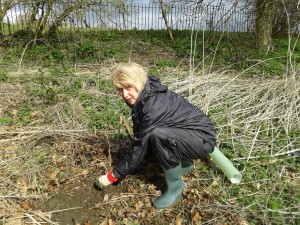
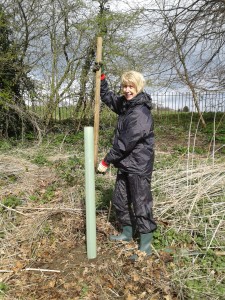
I discovered that the council in my pretty little Cotswold town in England was funding a new tree planting scheme along the banks of our renovated canal and fringing the ridges of my local park, overlooking a lake and weir: silver birches, rowans, oaks, maples. I saw a chance, and invited a childless friend and neighbour along.
That day, we found ourselves under a spring sun flitting behind black clouds and threatening rainbows over the hills and valleys while we helped to dig holes, scoop moist earth round young roots, funnel weather guards over the saplings’ baby heads and drive in stakes to support them. I found myself asking the name of each plant, in some weird sense bonding with it, and even – unashamedly – talking to it as if it was a child. Kneeling beside the bed of each root ball, teasing out those little water-seeking veins, taking a moment to think about what I’d lost but what I was now giving to something living, was surprisingly moving and reviving.

My neighbour finds it hard to talk about her loss of children, but somehow, too busy digging to feel self-conscious, backs turned on each other, we began telling our personal stories of childlessness to each other.
On an impulse, I took out some postcards I was carrying in my backpack. For each young, vital thing I planted, I wrote a message to a child I never had and posted it into the tree’s new resting place among the soil. It didn’t cure my pain, but it felt like part of an answer.
I discovered something simple: that gardening, nurturing something other than a child, is great therapy for childlessness.
Paula Coston writes on childlessness, the older woman and singledom at her blog, http://boywoman.wordpress.com. Her novel, On the Far Side, There’s a Boy, comes out in June. It’s about an Englishwoman from the 1980s to now and her gradual discovery, through a link with a little boy in Sri Lanka, that she will never have a partner or children.

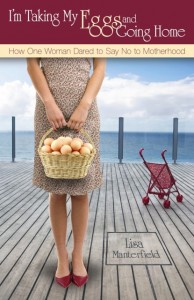
~ "a raw, transparent account of the gut-wrenching journey of infertility."
~ "a welcome sanity check for women left to wonder how society became so fixated on motherhood."