This week’s suggested Whiny Wednesday topic is thought-provoking:
Fearing the quiet we will have for years
How do you feel about this? Is it something you worry about? If not, what is on your mind this week?
filling the silence in the motherhood discussion
This week’s suggested Whiny Wednesday topic is thought-provoking:
Fearing the quiet we will have for years
How do you feel about this? Is it something you worry about? If not, what is on your mind this week?
By Lisa Manterfield
 I’ve been writing and talking a lot about grief lately—here on the blog, in my fiction, in my personal life, in the novels I’m reading, and for the Life Without Baby book that came out earlier this year. Even when I got chatting to a stranger on a plane, the conversation turned to the topic of grief.
Over paper cups of tea, this woman—who had lost her brother to suicide—and I talked about how grief stays with us long after we’re “over it”, how the shape of grief changes with time, how it can change us, and how everyone carries around their own personal grief.
My only regret in the discussion is that it didn’t begin sooner on our journey, because I would have liked to hear more about what she had to say on the subject. But eventually we parted ways, she to her office and I to catch another flight, and I didn’t have the opportunity to ask her more about her grief.
So, I’d like to ask you instead.
As a society, I don’t believe the topic of grief gets enough attention. We’re uncomfortable with grieving people, no matter what type of loss they’ve suffered, but it’s especially true when the loss isn’t understood.
So let’s start the conversation now. Let’s talk about this grief. I’d love to hear what you have to say.
By Lisa Manterfield
 One of the big changes I’ve seen since starting this site is that the topics of infertility and childlessness are being brought out from behind closed doors and are being discussed in more public forums.
Whereas once I felt as if I was the only person talking openly about this, I’ve since found an incredible network of fellow bloggers and authors writing very intimately about their stories. I’ve also received several requests to complete surveys from researchers who are exploring the effects and issues of unplanned childlessness.
In your corner of the world, you may still be feeling that NO ONE is talking about this, that no one understands what you’re going through, and even your closest confidants don’t want to talk about it. Sadly, I think this is still true for most of us. But the tide is turning, and the more we talk about this topic and the more we venture out and start these conversations, the less taboo it will become.
Even if you’re not ready (or feel as if you will never be ready) to start your own campaign for understanding, you’re already part of this quiet revolution. You’re here, you’re talking about your experience with others, you’re sharing comfort and encouraging other readers. Even if you’re doing all of this anonymously and even if you’re coming here in secret to contribute to these conversations, you are part of the change that’s coming.
This issue is never going to go away, in fact I believe that our segment of the population will only continue to grow (but that’s another post for another day), but perhaps in the future, our sisters who need help will be able to pick up a leaflet from their doctors or walk into a local support group or sit down with a friend over coffee and feel comfortable talking openly about what it feels to not to have the children you wanted.
Thanks for not rebelling after last week’s missing Whiny Wednesday post. This week’s topic is for those of you who arrived here via the infertility route.
Do you feel you were left hanging by the fertility industry?
Okay, I know that’s a loaded question, so if you don’t feel like jumping in on this topic, or if it doesn’t apply to you, feel free to bring your own whine to the party this week.
By Lisa Manterfield
 Today’s post is dedicated to Share’s Walk of Remembrance and the Wave of Light in support of infertility and pregnancy loss. Through this Footprints blog tour, we aim to shatter the stigma. Please check out this list of courageous bloggers sharing their stories. Here’s mine:
Before my children were born, I imagined them vividly. I laid out a smorgasbord of family traits and handpicked the best of them.
My son, Valentino, would be named for my husband’s favorite uncle, and he’d be a chip off the old block. He’d have his daddy’s good looks—the profile of an Aztec Prince—paired with Grandma Tilly’s curiosity and great-grandpa Aureliano’s piercing green eyes. I pictured my Valentino to be charismatic and creative; he’d love music and art, and of course, he’d adore his mother.
My daughter, naturally, would take after my side of the family. Sophia would be named for my dad’s mother and would inherit her spirit of survival and her generosity, and she’d get my straight hair, so I’d know how to deal with it. I could picture Sophia easily, and I’m sure you’ll understand when I tell you that I knew she would be beautiful.
Before they were born—in fact, before they were even conceived—I imagined my children to life, and they were absolutely perfect. And why wouldn’t they be? Does any mother really imagine her future offspring any other way?
But here’s the thing. My children are perfect. Sophia and Valentino could never be anything but perfect, because they never got the chance to exist anywhere but in my imagination.
I was 38 years old, and four years into trying to conceive my children when my doctor pulled out a notepad and drew a lopsided oval. “Imagine this is your ovary,” he said.
“You have one producing follicle.”
It just takes one, I thought, but the doctor looked at the wall just past my eyes and I could tell this news wasn’t going to be good.
He explained what was going on in perfectly logical, unsentimental, doctor speak—I assume—but what I heard was:
“A normal ovary should have 6-10 good follicles, but you have mumbo-jumbo-icky-sticky-messed-up-insidy-bits-itis, so you have a snowflake’s chance in hell of having a baby.”
The actual math worked out like this:
Mr. Fab (my hubby) plus Lisa (that’s me) to the power of love, equals big fat nothing, no baby to infinity.
Mr. Fab plus Lisa times IVF times unknown X equals approximately 25 percent chance of conception.
Mr. Fab plus egg donor minus Lisa minus love, all to the power of voodoo times big bucks squared equals a 50-50 shot, maybe baby, maybe not.
I can’t move on from this particular part of the story without mentioning that up until this point, IVF had been sold to us as the silver bullet, the sure thing, with glossy brochures showing healthy bouncing babies and glowing parents. There was no mention of the outrageous expense, the painful injections, or the emotional toll of the slippery slope of hope, expectation, and disappointment. The odds quoted covered the vast spectrum of all women, all ages, all scenarios and were not calculated for one Lisa, one set of dud ovaries, one desperate attempt. Instead we were simply told, “It will all be worth it when you get your baby.”
I’m sure the doctor expected us to say, “Where do I sign?” But his glossy offer wasn’t nearly good enough for me to bet my money, my body, and, most of all, my heart on, so we said, “No thank you,” and left.
There’s a lot more to this story of course, enough to fill two books and almost 1,400 blog posts. Suffice to say, my husband and I, armed with information from every possible source, explored all the avenues available, but ultimately our children, a pregnancy, even a near-miss, eluded us. We made the hardest decision of our lives and started trying to figure out how to build a life that didn’t include Valentino or Sophia.
It’s been a long road of acceptance, filled with a lot of tears, much stomping around being furious at the world, and yes, I’ll admit it, a fair bit of glaring at mothers who don’t fully appreciate the children they’ve been given, and griping about the unfairness of how life’s blessings are sometimes doled out (see any Whiny Wednesday post for details.) But I’m doing pretty well at this childless thing now.
That said, my wounds have scabbed, rather than healed, and I have yet to put myself through the torture of accepting a baby shower invitation. The last one I went to was for a baby boy who’s now in middle school. I’ve sent gifts and visited every friend’s newborn, but I just couldn’t face all that comparing pregnant bellies and passing around impossibly tiny onesies, or the smiling faces saying, “You’re next!” I knew I’d just end up hyperventilating in the guest bathroom again.
But if a well-meaning, but stressed-out mom tells me, “You wouldn’t understand; you’re not a mother,” I can now simply grit my teeth and try to put myself in her shoes. I’ll suggest that maybe because I’m not entrenched in the child-rearing wars, I could offer a different perspective, and that perhaps my four decades of preparing for my own children, might give me some grounds for an opinion.
And when this mom tells me how perfect her children are, I’ll just smile and nod, because I know that mine are perfect, too. My daughter, Sophia, is whip smart and beautiful, and has never slammed a door or yelled that she hates me. And my son, my Valentino? He’s just so handsome, with those gorgeous green eyes, and oh, how he loves his mother.
I know every mother thinks her children are perfect, but in my memories and in my heart, mine really are—and they always will be.
The Footprints Blog Tour runs until October 15. Be sure to check out Erin’s piece that ran on Thursday and Lisa’s blog, out tomorrow.
If you’d like to participate on October 15, please post your Walk of Remembrance photos on social media using #ShareWalk2016 and your Wave of Light candle at 7pm that evening using #WaveofLight #pregnancyandinfantlossawareness.
By Lisa Manterfield
 I’m going to say this up front so I can get it out of the way: I really didn’t want to read any more books about infertility.
Like all of us here, I’ve worked hard to heal the wounds of my own infertility so that I can step out into a world full of mothers and children and not feel as if I’m about to suffocate. Reading other people’s stories played a big part in my recovery. I’ve done the work and the result it that life is pretty good these days, even without children of my own.
I am also aware that the hurt has not really gone away. It lurks under the surface, moving deeper year-by-year, granted, but always there. I’ve avoided reading more infertility stories because I don’t want to go back to those treatment rooms, those times of frustration, and that deep, dark sadness of being unable to create life. Even writing this last sentence reminds me of where I once was. So you see where my reluctance comes from.
But recently, Pamela at Silent Sorority asked me to participate in a blog tour for Julia Leigh’s memoir, Avalanche, A Love Story. Of course, I agreed. While our “sorority” may have been silent when Pamela wrote her book almost a decade ago, this is no longer the case. (You can see the growing list of bloggers who agreed to participate in this post.) We are vocal, we are sharing our stories, and we are supporting one another.
Despite our willingness to speak and write, there remains much ignorance and misunderstanding surrounding infertility. It’s what prompts pitying looks from people who ask if we have kids, and it prompts all the platitudes and hurtful comments we hear, falsely labeled as “helpful.” My personal favorites are “Just do IVF”, “Why didn’t you just adopt?”, and “You can’t have really wanted kids if you gave up so easily.”
Which is why we need to support authors like Leigh, who are willing to risk (and receive) judgement and pity because they crossed their own lines in the pursuit of motherhood. It’s important that women facing the possibility of fertility treatments find honest accounts of what it really entails (even if they choose to believe it will be different for them!) And it’s important that others who have no experience with infertility get to read a compelling story and perhaps gain insight, understand, and most of all, compassion. It’s why I sucked it up and bought and read Avalanche: A Love Story.
The book is short (I read it in two sittings) but powerful and beautifully written. It did indeed take me back to many of my own experiences, and at times I found myself wanting to yank her aside and impart my hard-earned wisdom on her. So many times I begged her not to make the choices she was about to make, but understanding how quickly logic and decision-making skills warp in the infertility world. By the end, I found myself connected to another infertility sister and understanding myself a little more.
I’ll be posting my full review on Amazon. If you decide to read the book, I encourage you to also leave a review. Word-of mouth is still the number one way most of us find books, and second only to buying books, reviews are the best way to support an author.
Pamela is hosting a blog tour for Julia’s book today. You’ll find a list of the participating bloggers here. I hope you’ll take a moment to visit some of them and perhaps find some new voices.
P.S. I know this post has replaced the usual Whiny Wednesday spot, but I think there’s enough in here to prompt a little outrage. Whiny Wednesday will be back next week.
It’s Whiny Wednesday, your chance to gripe about the issues you’re dealing with this week. This week’s suggested topic is one we’ve all had to deal with:
An over-abundance of work pregnancies
I can relate to this one. When I was trying to conceive, I managed a small department of about eight people. One year we had three simultaneous pregnancies…and none of them was mine.
Whine away!
As told to Kathleen Guthrie Woods
 Jessica and her husband John are childfree “by chance and then choice(?),” the parenthetical question mark indicating her struggle to make peace with that word: choice. After six of years of trying to get pregnant, they tried IVF, “but it failed,” she says. “We were told with my diminished ovarian reserve there was really no chance of IVF working without an egg donor.” It was at that point they decided not to pursue any more fertility treatments or adoption.
What a heartbreaking “choice”—one so many of us can relate to.
Today, Jessica is traveling through the acceptance phase of her journey, working on embracing her family of two, and hoping “to feel joyful again.” That’s our hope for her too.
Here’s more of her story.
LWB: Briefly describe your dream of motherhood:
Jessica: I always pictured a little boy, who looks just like John, looking up at me with his sweet face. I had names picked out for our two girls, but we never could decide on a name for our boy. I prayed, often, for the wisdom to teach our girls to truly know their value, because so many girls grow into women not realizing how much they are worth. I couldn’t wait to see John as a dad, interacting with our kids, with his sweet, gentle spirit.
LWB: What was the turning point for you?
Jessica: After our failed IVF, I was grieving. I did not understand all of the emotions I was having. I spent a lot of time talking and thinking about what was next and finally realized I was simply tired. I was tired of our life being on hold, of the emotional roller coaster each month, of feeling isolated and alone. I decided to go to an infertility support group to see if it could help me process everything. In that meeting, while each person talked about where they were on their journey to have a child, I realized I was done. Our life had been on hold for two-thirds of our marriage, waiting to get pregnant. I was barely making it out of bed half of the time. When it came to be my turn, I said how I was feeling, and the leader said she knew a couple who had chosen not to pursue any more fertility treatments nor to adopt. She said they were living “childfree” and living it well. That put all of the pieces in place for me. I had not heard anyone ever talk about choosing that path. It took several weeks for me to process this thought. I met with the lady of the couple to talk about her journey. I googled to see if I could find other women who had also chosen this path. (I am so grateful for all the woman who share their stories online!) John and I talked about it and finally decided that we also wanted to start accepting our life without kids. It was such a mixture of sadness and relief to finally make that decision!
LWB: What’s the hardest part for you about not having children?
Jessica: Finding a purpose in this world as a woman without kids. Also not being able to see my mom and dad with our kids.
LWB: What is the best advice you’d offer someone else like you?
Jessica: You are not alone, even if it feels like it. It is hard to find someone who truly understands the emotions that you are having, but it is worth trying to find that someone who has gone through a similar struggle. And only you can say how far and how long you go trying to have a baby, even though most people will have an opinion on it.
LWB: How has LWB helped you on your journey?
Jessica: I bought Lisa’s book Life Without Baby: Surviving and Thriving When Motherhood Doesn’t Happen when it came out. The timing was perfect, as I had really just come to the decision to accept our life without kids. Probably the main thing I got out of it right away was how much of what I was feeling was normal and okay. I felt a lot of pressure to go to both my sisters-in-law’s baby showers and to go to the hospital when my niece and nephew were born. This was right after our failed IVF. It was tough, so tough. Lisa talks about preparing for social events in her book, which helped me realize that it is okay to have good days and bad days. It is okay to opt out of a family event or a social event if I think it could be a trigger. And the biggest one was about Mother’s Day. It was so freeing to take control and have a plan to honor my mom while navigating around the day. Reading the book also confirmed to me that I was on the right path.
The LWB blog is great too. I am very thankful that something is posted pretty much every day, because it reminds me I am not alone!
In her email to me, Jessica wrote, “Answering these questions was helpful in reflecting on our journey, where we’ve been, and where we might be going.” I would love for you to experience the healing that can come from sharing your story with all of us at LWB. If you feel ready, go to the Our Stories page to get more information and the questionnaire.
If you’re not quite ready for this step, I encourage you to check out the Community Forums and other Our Stories, where you will find understanding and support from LWB readers who have traveled paths similar to yours.
Kathleen Guthrie Woods is a Northern California–based freelance writer. She is mostly at peace with her childfree status.
By Lisa Manterfield
 I absolutely love this article by Susan Silk and Barry Goldman about how not to say the wrong thing to someone in crisis. I wish it was mandatory reading for everyone, and I especially wish it came with a note explaining that it applies when talking to infertiles and the childless-not-by-choice.
The gist of their Ring Theory is that the person in crisis is at the center of the ring and those next closest to the person occupy subsequent rings. In the case of someone coming to terms with not having children, she would be at the center, her spouse or partner on the next ring, perhaps closest family and friends on the next, and more distant family, coworkers, and acquaintances beyond that.
The rule is that that if people have something mean or insensitive or opinionated to say, they say it to someone on a bigger ring. When speaking to someone on a smaller ring, they can only listen or—if they must say something—offer help, support, or comfort. No advice, no miracle stories, no blame or shame. No offering of their kids, no suggestions to adopt. “I’m sorry” is all that needs to be said. If they want to dump, dump outwards, not inwards.
I wish people would understand that someone who has just acknowledged she won’t ever have children is in crisis, and what she needs more than judgment and unhelpful help is for people to say to the right thing.
By Lisa Manterfield
 In the very early stages of our relationship. Mr. Fab and I discovered all sorts of odd things we had in common, one of which is that we both played the trombone as teenagers. Anyway, we’ve been talking about learning to play again, and we finally found a used instrument in good condition.
The main difference between a trombone and other brass instruments is that you make the notes by moving a slide up and down, rather hitting a key. It makes it a lot more difficult to hit just the right note. It’s also what makes the trombone so much fun to play, because you can slide easily from note to note, up and down and back again.
The reason I’m telling you all this is that today I’ve been thinking a lot about the whole coming-to-terms process. I’ve been thinking about it in terms of school grades, with the freshman class having just made the decision to live childfree or to stop fertility treatments, and having no idea how to start getting used to the idea. They eventually graduate to acceptance and begin to find a way to get happy, and ultimately go on to live a full and happy life without children.
But it’s really not that simple. You never really do hit all the notes precisely and in order. It’s much more like playing a trombone, where you slide from one state to the next and sometimes back again. One day, you’re content and determined to make the most of your situation, then something happens to trigger all those old emotions and you find yourself sliding back down. Then you get to talk someone who understands you and you feel like you can really figure this out…until your friend announces a pregnancy and back down you go again.
So, I’m wondering, where are you on the sliding scale of coming-to-terms? Where are you right now and have you been better or been worse? Do you feel that, even though you have setbacks, you’re slowly moving towards a place of peace, or can you see no way to ever come-to-terms with your lot in life? Or have you already been up and down the scale and have finally found a place of contentment? I’d like to know.

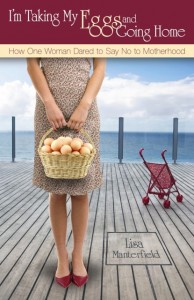
~ "a raw, transparent account of the gut-wrenching journey of infertility."
~ "a welcome sanity check for women left to wonder how society became so fixated on motherhood."